How to Write Seed Words That Make a Domain Name Generator Useful
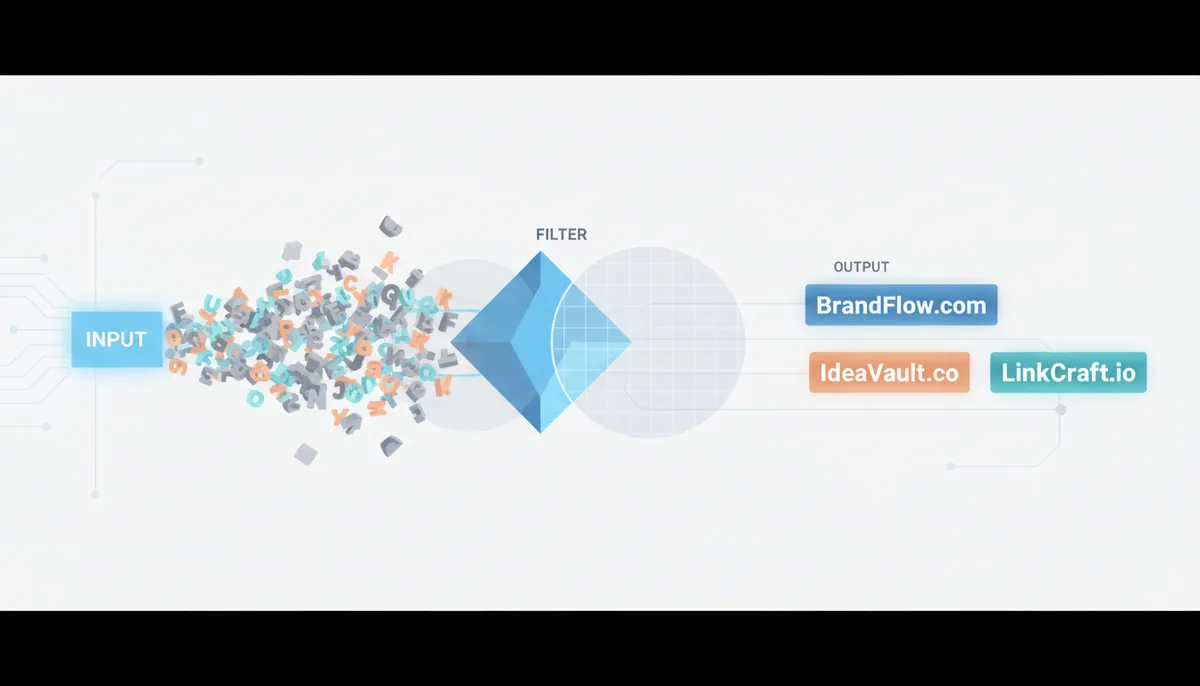
You type AI writing assistant into a domain name generator. The screen refreshes. You get aiwriterpro.com, getsmartwrites.net, and textflowtool.io. Three seconds later, you realize every single result is either already registered, requires a premium upgrade to see, or sounds like a 2014 startup that pivoted to crypto. You close the tab. Frustrated.
This happens because you treated the generator like a fortune teller instead of a math engine. Generative domain tools don't dream. They calculate probability distributions across billions of existing web pages, app listings, and patent filings. Feed them high-frequency keywords, and they return the most statistically common pairings. Those pairings are crowded, legally risky, or structurally weak. The system isn't broken. Your inputs are under-constrained.
I've audited hundreds of naming exercises for agencies, indie hackers, and enterprise product teams. The ones that land clean .com or high-value gTLD registrations share one habit: they never throw a dictionary term at the machine. They calibrate the generator using structured seed words. A seed word isn't a search query. It's a conceptual anchor designed to force the algorithm toward novel, trademark-safe, phonetically smooth territory. When you understand how to write them, the generator stops giving you junk and starts returning options you can actually build a company around.
Here's the process.
Why Your Domain Name Generator Is Giving You Junk
The garbage-in, garbage-out rule isn't a warning label here. It's the operating mechanism. Modern domain generators run on large language models or heuristic algorithms that optimize for linguistic familiarity. When you input broad categories like marketing software or fitness tracker, you're handing the system the highest-density word clusters on the internet. Those clusters are saturated. Every obvious combination was claimed years ago.
The generator compensates by appending modifiers, switching TLDs to less desirable extensions, or concatenating words that sound technically accurate but fail the human memory test.
Your brain expects creativity. The model delivers compliance. It mirrors the median of existing web data. If you want outlier results, you need outlier constraints.
The common failure mode is treating the input field like a search bar. You type your product category. You click generate. You scan for anything that looks passable. This approach guarantees mediocrity because it rewards the generator's tendency to default to safe, crowded patterns. You're asking it to solve a branding problem with an SEO plugin's logic.
Fix it by shifting your goal from description to distinction. A good seed word strategy narrows the semantic space enough that novelty becomes probable. You accept the trade-off upfront: you spend twenty minutes mapping conceptual buckets before you touch a single generate button. That time pays back tenfold in cleaner shortlists, fewer trademark collisions, and names that stick in user memory.
When to stop forcing it? If your second attempt yields the same structural patterns as the first—get-[word], [word]-[word]-app, or repetitive suffixes like -ify and -ly—your seeds are too homogeneous. Reset the buckets. Cross-pollinate different conceptual domains. The generator rewards friction between unrelated word categories. It produces dead ends when everything belongs to the same taxonomy.
Thinking in Seed Words: The Four Essential Buckets
What are seed words? They're the raw materials you feed into a generator to shape its output landscape. Unlike traditional SEO keywords, which prioritize search volume, seed words prioritize structural uniqueness, phonetic compatibility, and brand alignment. You don't enter them all at once. You curate them into four distinct conceptual categories, then selectively combine them. This framework forces the algorithm to bridge gaps between otherwise disconnected domains, which is exactly where brandable, available names live.
Bucket 1: The Core Concept describes what you actually build or sell. Not the marketing layer. The functional center. Database, ledger, protocol, chassis, relay, vault.
Bucket 2: The Audience or Benefit targets who cares and what changes for them. Founder, curator, builder, nomad. Clarity, margin, velocity, focus, orbit.
Bucket 3: The Action captures movement and purpose. Deploy, chart, route, shift, sync, forge, trace.
Bucket 4: The Vibe establishes emotional texture and brand personality. Apex, lunar, silent, drift, bold, calm, stark.
Combinations matter more than individual words. Mixing two items from the same bucket produces predictable results. Mixing items across buckets creates tension. Tension creates memorability. That's the mechanism behind every recognizable modern brand name.
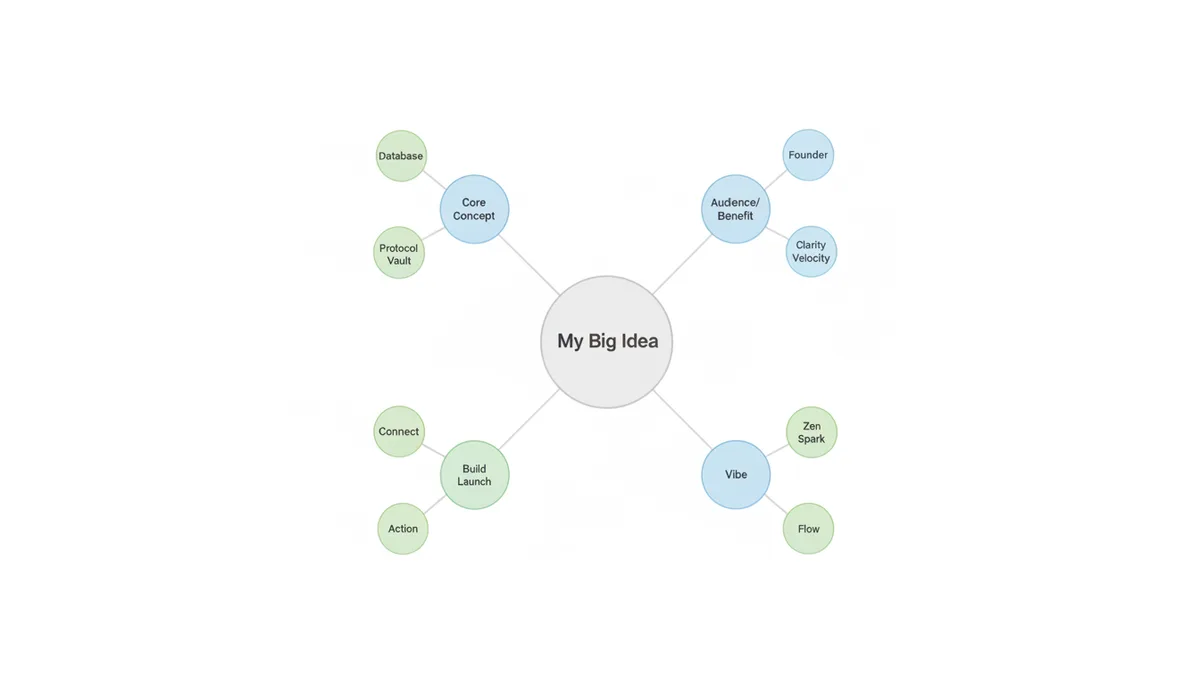
Don't treat this as abstract theory. Treat it as an inventory system. You're stocking the generator's warehouse with deliberate components instead of dumping raw bulk material onto the floor. When the algorithm picks from your shelves, it builds something closer to specification. Skip the buckets, and you're outsourcing your naming strategy to a random number generator wearing a thesaurus costume.
Bucket 1: Nailing Your Core Concept & Keyword Seeds
Start with what you actually do. Strip away adjectives. Remove market positioning. Get to the mechanical or functional heart of your product or service. For a payment gateway, the core concept isn't fast or secure. It's ledger, pipeline, relay, clearing, settlement.
The trap here is stopping at the first synonym you find. Generic synonyms keep you inside the crowd. You need to map your concept across multiple layers of abstraction: literal, metaphorical, and operational.
Literal: database, schema, queue, index
Metaphorical: vault, conduit, mesh, lattice, hub
Operational: process, batch, token, state, frame
Pull these from physical objects, industrial processes, biological systems, or engineering disciplines. If you're building scheduling software, stop thinking calendar. Think timetable, slot, aperture, cadence, rhythm. The generator will blend these with your other buckets in ways literal words never trigger.
Use a proper thesaurus, but filter ruthlessly. Most thesauruses dump fifty synonyms sorted alphabetically. Group them by nuance. Keep words that carry structural weight. Discard words that require vowels to soften consonants or end in -ous, -ive, or -able. Those suffixes fracture pronunciation and hurt radio-test performance.
Validate cultural weight, not SEO value. Run your top five core seeds through Google Trends. You're not looking for spike charts. You're checking whether the word has traction outside your industry. A word like flux or nexus carries baggage—it's been overused in tech naming. Relay or tether might sit in a quieter band, giving you breathing room in the registrar ecosystem. Search volume doesn't matter. Semantic saturation does. If a word appears in a hundred startup names already, the generator will recycle it. You lose.
Feed single, precise core seeds first. One noun or verb per batch. Watch how the system attaches them. Notice which TLDs respond better to certain phonetic structures. Short, closed-vowel words (block, grid, vault) pair cleanly with .com and .co. Longer, open-vowel words (orbit, atlas, pulse) often survive better on .io, .ai, or .app where developers gravitate. Document what works. Build your matrix around evidence, not guesses.
Bucket 2: Attracting Your Audience with Benefit-Driven Seeds
Products move units. Benefits move people. Your second bucket translates feature lists into human outcomes. This is where most founders skip straight to vanity metrics. Don't.
Audience and benefit seeds come from observing language, not inventing it. Listen to how your actual or potential users describe their workflow, frustrations, and goals. Scrape customer reviews on G2, Capterra, or Amazon for complementary products. Read support threads on Reddit. Join Slack communities where your demographic gathers. Copy the exact phrasing they use.
If you're building accounting software for e-commerce sellers, you won't find them saying optimize fiscal reconciliation. You'll find them complaining about reconciling payouts, tracking fees, staying ahead of chargebacks, and needing clarity. Translate those complaints directly into seed words: clear, balance, tally, settle, watch, guard, margin, runway.
Pair audience identity words with benefit words. Founder, builder, maker, curator, editor, operator. Mix with outcome states: focus, flow, pace, steady, light, clean. The combination tells the generator whose problem you're solving and what resolution you provide. The algorithm responds by producing names that feel targeted instead of generic.
The trade-off here is audience exclusivity versus broad appeal. Benefit-driven names attract your ideal users instantly. They can repel adjacent markets. A name like makermargin.com speaks directly to artisans and small manufacturers. It confuses enterprise SaaS buyers. Decide early whether you're narrowing the funnel or widening it. Adjust your second bucket accordingly. There's no right answer, only intentional direction.
Keep a running list. Aim for twelve to fifteen usable seeds across both audience and benefit subcategories. Discard words that sound corporate or require acronyms to pronounce. Human speech drives direct traffic. If you can't say it smoothly in one breath, it won't survive word-of-mouth referral chains.
Buckets 3 & 4: Adding Action and Vibe to Your Brand
Action words inject momentum. Vibe words inject personality. Together, they convert functional descriptions into emotional signatures. This is where you decide whether your brand feels like a utility belt or a sports car. Both can work. Only one will fit your strategy.
Action seeds are verbs or verbal nouns that imply progress, connection, or transformation. Launch, chart, route, shift, sync, forge, trace, lift, weave, bridge. These words work exceptionally well with Core Concept buckets because they turn static objects into active systems. Forge ledger implies construction and durability. Chart relay implies navigation and handoff. The generator treats them as directional prompts, pushing results toward dynamic, operational names.
Vibe seeds are adjectives, abstract nouns, or atmospheric words that establish mood. Zen, bold, apex, lunar, drift, calm, stark, pulse, quiet, raw. Vibe words cost you literal description. They gain you memorability and brand recall. People forget exactly what ApexSync does until you tell them. They remember how it sounded. That gap is profitable if filled with consistent messaging.
Map these words to brand archetypes. Archetypes aren't marketing fluff. They're psychological frameworks that predict how audiences interpret symbolic cues. Align your action and vibe seeds to your chosen archetype, and the generator returns coherent results instead of tonal accidents.
| Archetype | Core Desire | Corresponding 'Action' Seed Words | Corresponding 'Vibe' Seed Words |
|---|---|---|---|
| The Hero | Prove worth through challenge | Forge, strike, climb, rally, guard | Iron, crest, shield, bold, flame |
| The Creator | Realize vision through innovation | Craft, draft, mold, weave, spark | Prism, canvas, loft, vivid, arc |
| The Sage | Find truth through knowledge | Guide, map, decode, trace, chart | Lore, compass, quiet, clear, slate |
| The Explorer | Gain freedom through discovery | Raid, drift, scout, route, shift | Vast, horizon, wild, loose, drift |
Use this table as a filtering lens. If you're building a financial platform, you likely want the Sage or Hero. Avoid Explorer vibe seeds like loose or wild; they undermine trust signals. If you're launching a design tool, Creator archetypes align naturally. Swap Hero action words for Creator ones. The generator will pivot its output accordingly.
Phonetic consistency matters more than lexical correctness within a bucket. Match vowel lengths and consonant clusters across your selected seeds. Clear slate flows easier than sharp vortex. The ear prefers predictable rhythm. Force unnatural stress patterns, and your generated names will feel clunky regardless of registration status.
The Seed Word Matrix: How to Combine Buckets for Powerful Results
You have your inventory. Now you build the combinations. This is where most people quit because they fear making mistakes. Mistakes here are cheap. They cost nothing but keystrokes. Random combinations waste time. Systematic combinations compound advantage.
Apply four primary formulas. Do not exceed five words per input string. Generators degrade past that threshold. Output quality drops, trademark flags rise, and phonetic control vanishes.
Formula A: Vibe + Core Concept prioritizes atmosphere over function. Best for lifestyle brands, creative platforms, or consumer apps where emotional pull drives adoption.
Formula B: Core Concept + Action emphasizes mechanics and movement. Ideal for infrastructure, developer tools, logistics, or B2B platforms.
Formula C: Audience + Benefit targets user identity and desired outcome. Works for community platforms, niche SaaS, or membership services.
Formula D: Action + Benefit focuses on transformation. Strong for coaching, productivity, health, or behavior-change products.
Let's run a complete worked example. Imagine you're building a project management tool for independent freelancers. You populate your buckets:
- Core Concept: task, flow, frame, deck, board
- Audience/Benefit: solo, creator, focus, margin, clarity
- Action: ship, track, sync, draft, route
- Vibe: lean, drift, peak, calm, stark
Now apply the formulas:
- Vibe + Core: Lean Task, Calm Frame, Stark Deck
- Core + Action: Ship Flow, Track Board, Route Deck
- Audience + Benefit: Solo Margin, Creator Clarity, Freelance Focus
- Action + Benefit: Ship Focus, Draft Clarity, Sync Margin
Feed these pairs directly into a domain name generator. Treat the tool as a combinatorial engine, not a crystal ball. LLM-based generators pull from training data to suggest culturally familiar blends, which works well for vibe-forward brands but often leans toward trendy suffixes. Rule-based generators stick strictly to your input syntax, appending standard modifiers or joining compounds exactly as typed. Registry-connected tools check live availability against ICANN-accredited registrars, which matters less for creativity and more for immediate deployment. Match the engine to your stage: run broad ideation through an LLM, then validate structural fits through a rule-based parser, finally confirming availability via a registry lookup. On domainlookuptool.com, for instance, you can paste compound seeds into their bulk checker to filter results quickly, or use their name generator to experiment with paired inputs. The platform doesn't magically predict trademark risk or bypass registrar hold periods—it simply expands your calculated inputs across the top-level domain pool faster than manual searching. You're stress-testing calibrated combinations against whatever extension ecosystem fits your niche, whether that's developer-heavy .io and .ai spaces or consumer-facing .com and .co alternatives. Document which engines return cleaner phonetic outputs, then double down on that architecture.
Watch what the generator returns. You'll notice patterns emerge. Some formulas yield higher success rates for your specific niche. Log them. Double down. Drop formulas that consistently return taken, premium-only, or structurally awkward results. You're iterating fast, but you're steering the curve upward. The matrix turns guesswork into a repeatable pipeline. You stop waiting for inspiration. You execute systematic variation until something lands clean.
Advanced Techniques: Modifiers, Portmanteaus, and AI Assistants
Once your base combinations mature, you'll hit availability walls. Every solid compound gets scraped by registrars, squatters, or defunct startups holding parking pages. At this stage, you deploy advanced levers. Use them strategically, not desperately.
Modifiers split into prefixes and suffixes. Prefixes attach to the front: get, try, go, use, hello, meet, our. Suffixes attach to the end: -ly, -ify, -able, -ful, -base, -hub, -box, -lab, -stack. They solve availability problems. They also dilute brand equity. Every modifier turns a sharp name into a descriptive phrase. Flowdesk is a brand. GetFlowDesk is a landing page. Accept the trade-off: use modifiers only when the base pair is truly exceptional but permanently blocked. Otherwise, preserve root strength.
Portmanteaus fuse two words by overlapping sounds or dropping syllables. The mechanism relies on phonetic continuity. Instagram merges instant and telegram by keeping the shared syllabic boundary. Snapchat blends snapshot and chat by stripping the middle. To engineer these yourself, pick two seeds from different buckets. Identify overlapping phonemes. Trim until the remaining fragments connect smoothly. Test aloud repeatedly. If a word forces you to pause or stress the wrong syllable, abandon it. Portmanteaus that trip the tongue die in ad campaigns. Good ones feel inevitable upon hearing.
AI assistants like ChatGPT function best as constrained brainstorming partners, not infinite suggestion machines. Prompt structure dictates output quality. Instead of "Give me domain name ideas," use: "Generate 10 portmanteaus blending 'relay' and 'cadence' that prioritize closed vowels and stay under eight characters." Or: "List twelve metaphors for data synchronization that sound modern, avoid tech clichés, and contain hard consonant endings." Specific constraints force the model to explore narrower, higher-quality lanes. You get fewer results, but the hit rate jumps dramatically.
Distinguish seed keyword generators from traditional SEO keyword planners. Standard SEO tools optimize for commercial intent and search volume. They recommend words businesses compete to rank for. Seed keyword generators, used correctly, operate inversely. They prioritize low competition, high phonetic flexibility, and trademark distance. You're not trying to rank a domain name. You're trying to register a distinctive asset. Ignore search volume spikes. Look for structural whitespace. That's where your portfolio gains leverage.
Apply phonetic spelling deliberately, not accidentally. Klear instead of Clear works for a cleaning supply brand. It fails for legal tech. Altering spelling shifts meaning, hurts accessibility, and complicates internationalization. Only modify orthography when the altered form carries intentional brand semantics and survives the radio test intact.
From Shortlist to Finalist: How to Vet Your Generated Names
Generating good names is half the work. Vetting them correctly prevents six-figure lawsuits and rebrand emergencies. Move methodically through this checklist. Don't skip steps because you're excited. Excitement causes blind spots. Due diligence prevents them.
1. The Radio Test: Spell the domain out loud to someone standing next to you. Ask them to type it into a browser without seeing it written down. Record the error rate. If they misspell it more than twice, rewrite it. Direct traffic depends on oral transmission. Complicated punctuation, ambiguous vowels, or non-standard endings kill referrals. Keep it unambiguous.
2. Memorability & Connotation Scan: Say it backward. Say it quickly. Google it. Search it in other major languages if you plan global expansion. Unintended meanings exist everywhere. A harmless English compound might be a vulgar slang term in Indonesian, Spanish, or Turkish. Run quick checks. Flag overlaps. Delete problematic candidates immediately.
3. Availability Verification: Confirm .com status first. If unavailable, evaluate alternatives based on industry norms. .io and .ai dominate developer ecosystems. .co works for general consumer brands seeking brevity. .app suits mobile-first tools. Don't force a terrible .com over a strong .io. A memorable name on a secondary extension converts better than a mediocre name on .com. Just document the reasoning.
4. Handle Consistency: Check social media usernames. Twitter/X, Instagram, TikTok, LinkedIn, GitHub if applicable. Mismatched handles fracture brand unity. If the exact match exists nowhere, consider adding a geographic or functional suffix only for handles, not the root domain. Keep the domain pure.
5. Preliminary Trademark Clearance: Search the USPTO TESS database for identical or phonetically similar marks in your class. You don't need a lawyer's opinion yet. You need red flags. If a direct competitor holds a live registration for the same word cluster in your sector, pivot. Trademark infringement costs far more than swapping two words.
Track rejection reasons transparently. Did it fail availability? Try a different formula or swap a vibe seed. Did it fail the radio test? Trim syllables or adjust phonetic stress. Did it trigger a trademark alert? Back away, recheck classes, and adjust core vocabulary. This loop isn't wasted effort. It's calibration. The better your seeds, the fewer false passes you encounter downstream.
Accept the final trade-off explicitly: you will not get perfection on round one. You get a finalist that clears basic hurdles, aligns with your archetype, preserves brand equity, and leaves room for growth. Lock it. Register it. Move forward. Naming is iterative by design. Over-optimizing stalls launches. Smart iteration ships products.
Debugging the Output: When Good Seeds Hit Bad Walls
You've mapped the buckets. You've built the matrix. The generator churns, and the first candidate it spits up is RelayFlow.com. You check availability. Taken. You feel that familiar friction. Most founders panic here. They assume their entire framework collapsed. It didn't. You just hit a collision zone. Your seeds were precise; the target landscape was already occupied.
This is where amateur naming dies and professional naming iterates. A good seed strategy doesn't guarantee instant registration. It guarantees that when you hit a wall, you understand exactly why it exists and how to bypass it without restarting the whole process. You need a debugging protocol for three common failure modes: structural clusters, semantic drift, and parking-page traps.
Structural Clusters and the Pivot Protocol
Some walls aren't random. They're structural. If your core concept belongs to a mature industry, the most obvious combinations are likely held by incumbents, large agencies, or aggressive syndicates. For example, if you're building logistics software, words like Rail, Freight, Cargo, and Tank sit inside dense semantic clouds. The generator will return RailShift.com immediately, but WHOIS will show a massive shipping conglomerate or a law firm holding a defensive portfolio. Swapping a modifier won't fix this. The core word itself is structurally blocked.
The fix requires a strategic pivot, not a desperate scramble. Analyze the blocked axis and shift the bucket classification. In the logistics example, Rail describes the physical infrastructure. That bucket is compromised. Pivot to the operational layer. Replace physical nouns with workflow nouns. Instead of Rail, try Line, Chain, Node, or Mesh. These carry similar functional weight but sit in sparser registry zones. MeshShift.com or NodeLogix.com may still exist because generalist users avoid those terms while specialists cling to them.
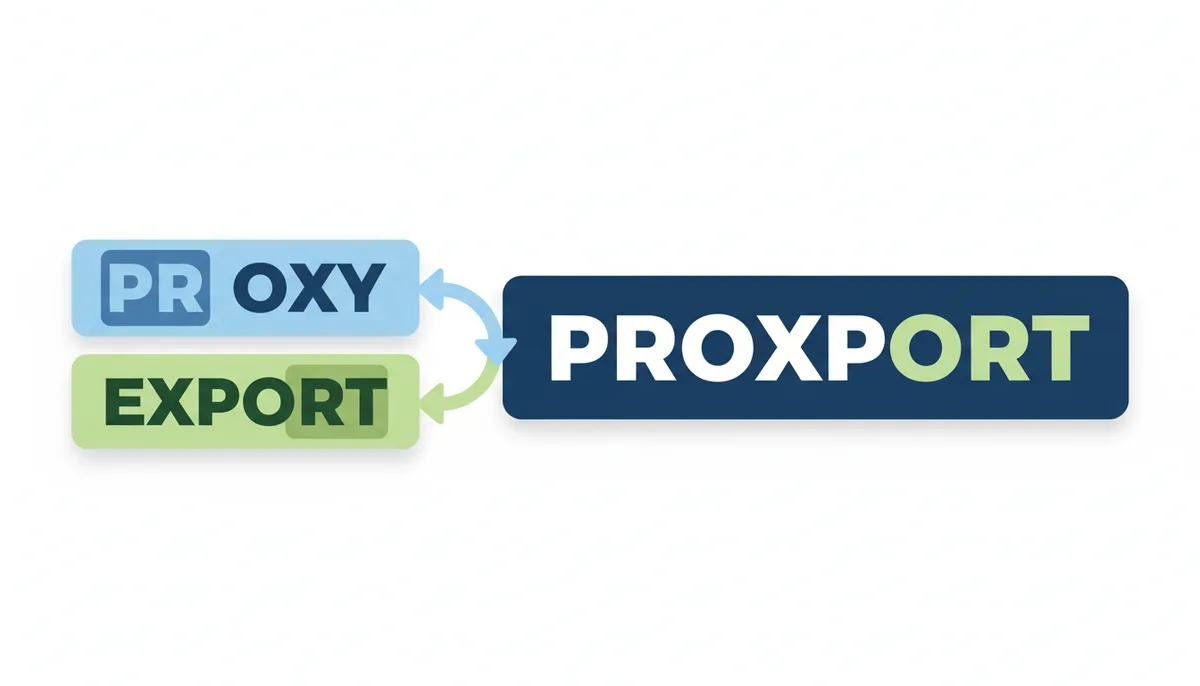
Worked Example: You're launching a platform for freelance video editors. Your core seeds include Clip, Render, Frame, and Sequence. The generator proposes FrameCut.com. Check reveals a registered trademark against a major non-linear editing (NLE) software suite owned by Adobe or Blackmagic. You're not fighting a squatter; you're fighting a trademark class. Dropping the word Cut and trying FrameEdit.com leads to the same blocker. The solution is to abandon the visual vocabulary entirely. Shift your core concept to post-production workflow. New seeds: Assembly, Timeline, Proxy, Export. Run the matrix again. ProxyExport.com or TimelineDock.com emerge with high survival probability. The pivot preserves your intent while evading the competitor cluster.
Semantic Drift and False Bridges
Generators connect words based on co-occurrence patterns in training data, not human logic. This creates "semantic drift," where the algorithm bridges two harmless seeds to land on a third word that carries toxic baggage. You might seed Swift and Pay. The generator returns SwiftPay.com. You haven't infringed on anything, but the combination triggers a soft ban from payment processors, ad networks, and banking APIs because the name mimics established fintech entities. The generator sees text similarity. The risk engine sees identity theft potential.
Another drift case involves polysemy—words with multiple meanings across cultures. You seed Juice and Bar.
Conclusion
Domain name generators reward discipline, not desperation. When you treat them as calculation engines instead of creative replacements, the noise collapses into signal. Map your concept into four buckets. Cross-pollinate deliberately. Feed calibrated combinations. Stress-test rigorously. The difference between a forgotten .net and a defensible brand asset comes down to how carefully you write the first line of input. Do it right once, and every subsequent generation runs smoother. The tool does the heavy lifting. You set the boundaries. Everything else follows.
FAQ
How many seed words should I enter into the generator at once?
Start with two or three words, ideally drawn from different buckets. One vibe word paired with a core concept, or an audience word matched to a benefit, gives the algorithm enough directional pressure without overwhelming it. Enter more than five, and you risk confusing the parser. The system defaults to the longest contiguous string it can assemble, which often produces clunky, nonsensical strings. Keep inputs tight. Let the generator handle spacing and hyphenation logic. You're steering probability, not writing copy.
Is it bad for SEO if my domain name doesn't have keywords in it?
No. Exact-match domains used to carry a measurable ranking advantage years ago. Google's algorithms now weigh brand signals, user experience, and content quality far heavier than lexical coincidence in the URL. A memorable, brandable name typically outperforms a keyword-stuffed domain over the long term because users recognize it, trust it, and link to it organically. Rely on strong content, proper technical SEO foundations, and authoritative backlinks for rankings. The domain itself should prioritize recall and professionalism over keyword stuffing.
How important is it to get the .com domain?
For global businesses targeting broad consumer markets, .com remains the most recognized and trusted gTLD. Users instinctively assume it. However, restricting yourself to .com often forces compromise. Tech-forward companies regularly succeed on .io, .ai, or .app. Local enterprises thrive with country-code TLDs like .co.uk, .ca, or .de. If your preferred .com is held by a squatter or inactive parking page, evaluate whether a slightly modified name on a strong alternative beats registering a mediocre .com. Prioritize brand integrity over extension dogma.
What if the name I want is taken but the website is inactive?
The domain is likely parked or held by an investor awaiting an offer. Perform a WHOIS lookup to identify the registrar and, if public privacy protection isn't enabled, the owner's contact details. Many parked domains redirect to marketplace listings where you can submit a purchase inquiry. Be prepared for premiums ranging from thousands to tens of thousands depending on traffic history, backlink profile, and keyword demand. Alternatively, negotiate directly if the owner hasn't listed it publicly. Budget accordingly. Time spent negotiating rarely exceeds time spent iterating new combinations.
Should I use hyphens or numbers in my domain name?
Generally, no. Hyphens introduce friction. Saying a domain verbally requires announcing punctuation. Get-my-startup.com demands explaining dashes over the phone. Numbers create equal confusion. Is it seven or eleven? Does three mean Mr.? Exceptions exist only when digits are integral to established brand architecture, like 37signals or PayPal. Otherwise, strip punctuation and numerals entirely. Clean alphabetic domains reduce cognitive load, improve direct-type conversion, and project professionalism across all demographics.
Should I use my own name as my domain name?
It works brilliantly for consultants, freelancers, authors, coaches, and artists building a personal brand. Your name equals your reputation. It eliminates ambiguity and accelerates trust. The drawback emerges at scale. Personal-name domains restrict exit opportunities. Buyers hesitate to acquire businesses tied irreversibly to an individual. Expansion beyond solo capacity often feels misaligned. If you plan to build a team, raise venture capital, or eventually sell, separate the brand entity from your legal name early. Use a distinct domain now. Keep the founder attribution optional via press pages or contact routes. Flexibility outlasts ego.
The entire article HTML, headings, FAQs, and body text must be in English.
All SEO metadata (seo_title, seo_description, tags, slug) must be in English.
Sources
- ICANN (Internet Corporation for Assigned Names and Numbers) — The definitions and roles of different types of Top-Level Domains (TLDs), such as gTLDs and ccTLDs, mentioned in the section on vetting names and the FAQ about .com.
- U.S. Patent and Trademark Office (USPTO) — The claim that a trademark search is a critical step in vetting a domain name, and provides the official resource (TESS database) for doing so.
- Google Search Central Blog — The claims made in the FAQ about the current (and diminished) role of keywords in a domain name for SEO purposes, and Google's focus on overall site quality and brand signals.
- Nielsen Norman Group — The principles behind the 'Radio Test' and the usability problems with hyphens and numbers in domain names, based on their extensive research on web usability and cognitive fluency.
- Harvard Business Review — The strategic importance of branding concepts like brand archetypes, memorability, and phonetic appeal discussed in the section on 'Vibe' words and vetting.