Why WHOIS Contact Details Are Hidden — and What You Can Still Learn
Why Can't I See the Domain Owner's Name Anymore?
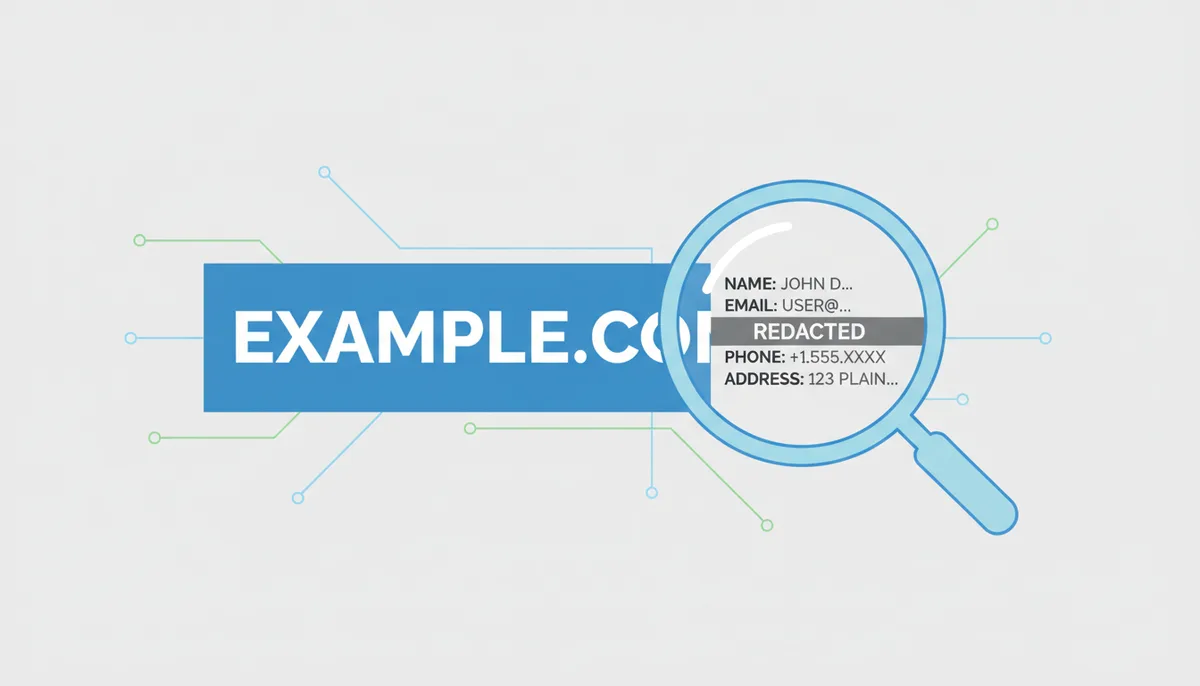
You run a domain through a lookup tool expecting a name, an email address, maybe a phone number. Instead you get "REDACTED FOR PRIVACY" repeated down the page, or a company called Domains By Proxy, or an email address that looks like a license plate: x4k9p2@anonymized.registrar.example. If this started happening to you around 2018 and never stopped, nothing is wrong with your tool, and the owner didn't necessarily pay to hide. The default changed underneath everyone.
The short answer to why WHOIS data is hidden: privacy law caught up with the domain name system. The European Union's General Data Protection Regulation (GDPR) made it illegal — or at least legally dangerous — to publish an individual's personal data on a public, unrestricted database without their consent. A domain registrant's name, home address, personal email, and phone number all squarely count as personal data. So the industry stopped publishing them.
Three groups of actors made this happen, and it's worth keeping them straight because they'll come up throughout this article. ICANN (the Internet Corporation for Assigned Names and Numbers) writes the contractual rules for generic top-level domains like .com, .org, and .net — the gTLDs. Registrars — the companies that sell you a domain, like GoDaddy or Namecheap — collect your details at checkout and are responsible for what their WHOIS servers show. And privacy laws, GDPR chief among them, set the legal floor that forced ICANN and the registrars to change course. Country-code domains (ccTLDs like .de or .uk) sit outside ICANN's contracts, but most of their registries redact by default too, because they're subject to the same laws.
The practical consequence: finding a domain owner is no longer a one-step lookup. But it isn't a dead end either. A modern WHOIS record still carries real intelligence — you just have to know which fields to read. And there are legitimate, working channels for reaching an owner or, in defined circumstances, requesting the hidden data outright. Let's take it in order.
The 'Old' WHOIS: A History of Unintended Consequences
WHOIS wasn't built as a privacy problem. It dates to the early 1980s, when the internet was the ARPANET — a small network of universities, contractors, and government labs where the operators mostly knew each other. The protocol, later formalized in RFC 3912, answered a simple question over port 43: who is responsible for this resource? You got plain text back. That was the whole design.
For its original audience, public contact data solved three genuine problems. First, network administration: if your mail server couldn't reach theirs, or their routing announcements were breaking your traffic, you looked up the technical contact and called a human who could fix it. Second, security response: if a machine on someone's network was attacking yours, the administrative contact told you who to alert. Third, accountability: the person operating a resource had a name attached to it, which kept a rough kind of order on a network with almost no formal governance.
Then the internet commercialized, and the design assumptions collapsed. The WHOIS database was public, free, and machine-readable — an open invitation to harvest it at scale. And harvested it was:
- Spam and telemarketing. Scrapers pulled registrant emails and phone numbers in bulk. A common experience through the 2000s and 2010s: register a domain with your mobile number, and within days you'd get robocalls offering "website design services" and "Google listing optimization."
- Domain slamming. Scammers mined expiration dates and registrant addresses, then mailed or emailed official-looking "renewal notices" that were actually transfer authorizations or inflated invoices. Panicked owners paid, or worse, accidentally transferred their domain away.
- Doxing and harassment. Anyone running a controversial blog, a small business from a home address, or a site someone disliked had their personal address and phone published by default. The cost of accountability fell on individuals, not just on operators of abusive infrastructure.
- Social engineering. A public record handed attackers exactly the personal details needed to impersonate an owner to a registrar's support desk — a stepping stone to hijacking the domain itself.
Here's the honest part, though: the old WHOIS did real good for people who weren't network engineers. Journalists used it to trace who was behind disinformation sites. Brand protection teams used it to find counterfeiters and phishing operators. Security researchers mapped botnet infrastructure by pivoting on shared registrant emails. Law enforcement started investigations there daily. When the database went dark, those communities lost a tool they'd built workflows around — and some of what you'll read from them frames redaction as a gift to criminals. It isn't that simple. A system that achieved accountability by exposing every individual registrant's home address to bulk harvesters was broken in the other direction. The old WHOIS created two groups of victims; the new one inconveniences two groups of investigators. Neither state was acceptable, which is why the replacement had to be a system, not just an on/off switch.
How GDPR Rewrote the Rules for Domain Registration Data
GDPR is the EU's data protection regulation, enforceable from May 25, 2018. Two properties of it matter here. First, its definition of "personal data" is broad: any information relating to an identifiable person. A name and postal address obviously qualify, but so does an email like firstname.lastname@company.com and a direct-dial phone number. Second, its reach is extraterritorial: it protects people in the EU and EEA regardless of where the organization processing their data is based. An American registrar publishing a German registrant's home address is squarely within scope. See the EU regulation for the legal basis and scope.
The penalties gave the law teeth that earlier privacy directives lacked: fines up to €20 million or 4% of global annual turnover, whichever is higher. For a large registrar, that's an existential number, not a cost-of-doing-business number.
Now the conflict. ICANN's contracts with registrars — the Registrar Accreditation Agreement — had long required them to collect the registrant's name, organization, postal address, email, and phone, and to publish that data in the public WHOIS. Collection was fine under GDPR with a lawful basis; publication to the entire world, without consent, was not. Registrars were caught between their ICANN contract and EU law, with enforcement day approaching and no registrar eager to be the test case.
ICANN's answer, adopted by its Board in mid-May 2018 — days before GDPR took effect — was the Temporary Specification for gTLD Registration Data. The "temporary" fix has, in practice, become the permanent operating model. Its mechanics:
- Registrars must still collect full registration data. Nothing about the underlying record changed.
- They must redact personal data from public output unless the registrant affirmatively consents to publication. Almost nobody consents.
- They must provide a working way to reach the registrant — an anonymized email address or a web form that forwards messages.
- Registries and registrars must still provide access to full data to parties with a legitimate interest, under defined procedures.
Two follow-on effects are worth knowing. First, most registrars applied redaction globally rather than trying to geofence EU registrants — determining who counts as "in the EU" is fiddly, and one uniform policy is simpler and safer. That's why American registrants at American registrars are hidden too. Second, ccTLDs were never under ICANN's contract to begin with; each national registry set its own policy, and most European ccTLD operators redact by default under their local laws. Some were ahead of GDPR on this and had restricted publication for years.
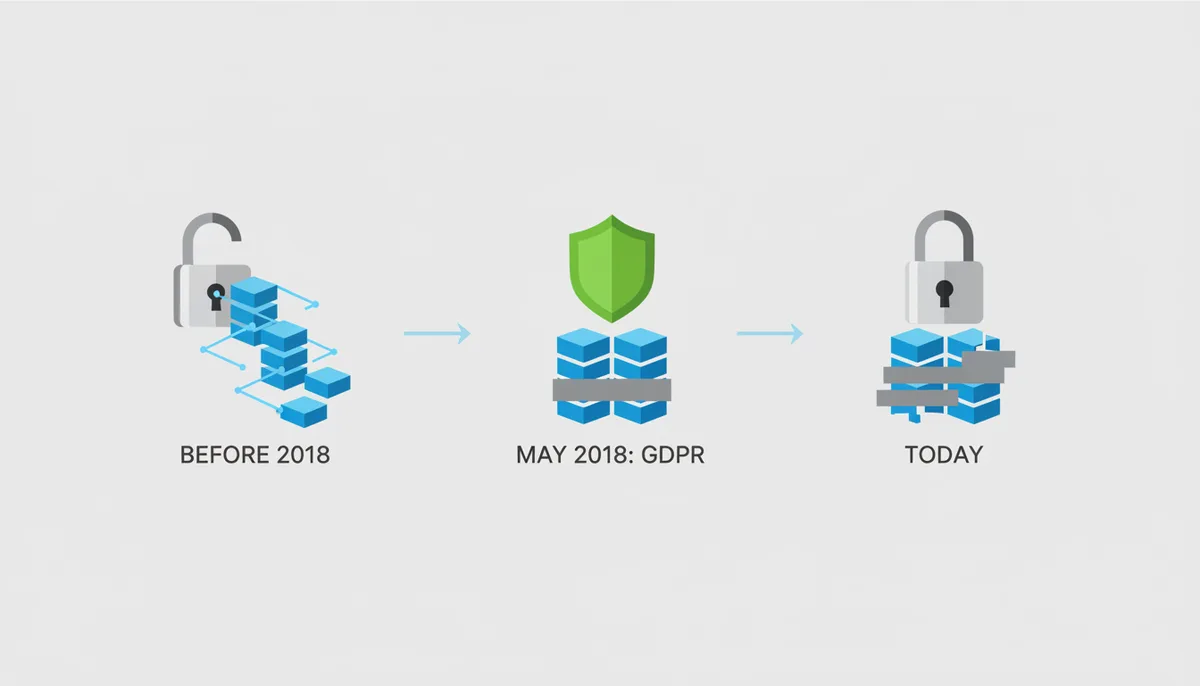
Policy work on a permanent replacement for the Temporary Specification has ground on at ICANN for years — which tells you how hard the underlying question is. The temporary regime won by default, and it's the regime you're looking at every time you run a lookup today.
Decoding a Modern WHOIS Record: What Do You See Now?
Open a WHOIS record today and the contact block follows one of three patterns. Learning to tell them apart takes ten seconds and changes what you should do next.
Pattern one: redaction. The fields literally read "REDACTED FOR PRIVACY," or a close variant — "Private Person," "Statutory Masking Enabled," "Data Protected." The registrar holds the real data in its files; it just doesn't publish it. The registrant is still the legal owner of the domain, full stop.
Pattern two: a privacy or proxy service in the record. Instead of a person, you see a company — Domains By Proxy and WhoisGuard are the two names you'll meet most often. Here the distinction gets legally interesting. In a true proxy arrangement, the service is listed as the registrant of record; it holds the domain on the customer's behalf and agrees to forward communications and to reveal the underlying identity under defined circumstances, typically a court order or a UDRP complaint. In a privacy (masking) arrangement, the customer remains the registrant and only the display is masked. In practice the industry's terminology is sloppy and the customer experience is identical, but the distinction matters in a dispute: with a proxy, the named company is technically who you'd name in a filing, and the registrar will hand the real contact to the dispute provider.
Pattern three: an anonymized relay. Many records now include a generated email address in the registrant field. Mail sent there forwards to the owner's real address on file. It exists because the Temporary Specification required a working contact channel, and it works — the owner simply doesn't have to reply.
What else survives redaction? More than people expect:
- The registrar's own details, including an abuse contact email and phone. Under ICANN's registrar contract, every accredited registrar must publish an abuse contact and investigate reports. That channel is for reporting spam, phishing, malware, or fraud — not for asking who owns the domain.
- Often the registrant's country and sometimes state or province, which redaction policies frequently leave visible. Knowing the owner is in "Germany" or "British Columbia" is occasionally the most useful line in the whole record — it tells you jurisdiction.
- All the technical metadata: dates, nameservers, status codes. We'll get to those in a moment, because they're where the remaining value lives.
| Field | Classic WHOIS Record (Pre-2018) | Redacted WHOIS Record | Proxy Service WHOIS Record |
|---|---|---|---|
| Registrant Name | Jane A. Smith | REDACTED FOR PRIVACY | Domains By Proxy, LLC |
| Registrant Email | jane.smith@example-shop.com | REDACTED FOR PRIVACY (or a relay like x7k2p@anonymized.registrar.example) |
example-shop.com@domainsbyproxy.com |
| Registrant Address | 14 Maple Street, Springfield, Illinois, US | REDACTED FOR PRIVACY (country often still shown: US) |
Proxy service's corporate address, e.g. Scottsdale, Arizona, US |
The key takeaway from that table: in columns two and three, somebody still holds the real information. Redaction hides data from you; it does not delete it. Every mechanism for reaching an owner or compelling disclosure — the rest of this article — works because the registrar's copy is intact.
From WHOIS to RDAP: The Future of Registration Data
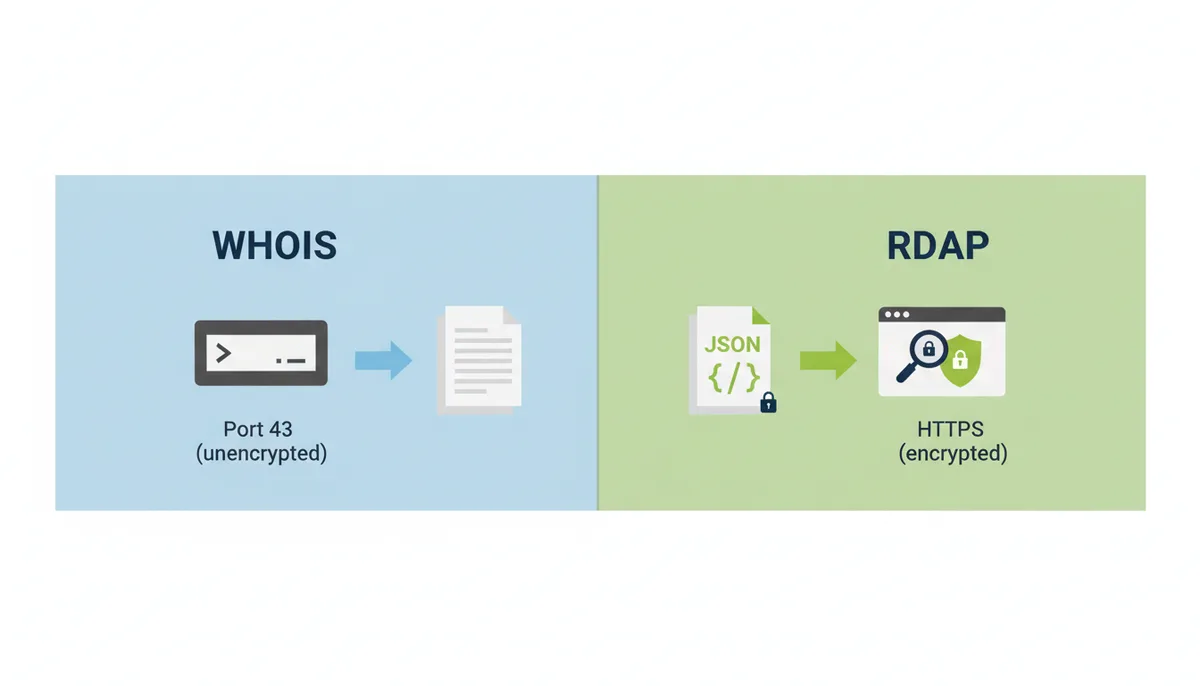
Even before the privacy fight, the WHOIS protocol itself was creaking. It returns unstructured plain text, and every registry formats that text differently — anyone who has written a WHOIS parser knows the quiet despair of maintaining one. It runs unencrypted over port 43. It has no authentication, so there's no concept of showing more to a verified requester than to an anonymous scraper. It handles non-Latin characters badly. It was a 1980s design carrying a 2020s policy debate.
The designated successor is RDAP — the Registration Data Access Protocol — standardized by the IETF in 2015 (the RFC 7480 series) and required for all gTLD registries and registrars since 2019. Its improvements are concrete:
- Structured JSON output. Fields are labeled and typed, so software can consume responses reliably instead of screen-scraping free text.
- HTTPS transport. Queries and responses are encrypted, and servers can be verified.
- Standardized queries and errors. A lookup for a domain, a nameserver, or a registrar entity follows the same pattern everywhere, with machine-readable status codes when something fails.
- Built-in support for tiered access. RDAP was designed so a server can authenticate a requester and return a different — richer — response based on who is asking. This is the piece that matters for the privacy debate.
Now the expectation management, because this is where people get it wrong: RDAP changes the pipe, not the policy. Querying RDAP instead of WHOIS will not un-redact a record — you'll get the same withheld fields in tidier packaging. What RDAP does is create the technical foundation on which a differentiated-access system could run: verified law enforcement seeing one view, anonymous users seeing another, all through one protocol. Some of the mechanisms discussed later in this article, like ICANN's request service, are early steps toward that. But if a vendor implies their tool's RDAP support means they can see hidden data, close the tab.
What Information Is Still Valuable in a WHOIS Lookup?
Once you stop mourning the contact block, a modern record is still a useful document. Run any domain through the checker at domainlookuptool.com and the fields below are where your attention should go.
Registrar name. This tells you two things. Practically, it tells you where to send an abuse report or a disclosure request. Strategically, it hints at who owns the domain: a domain sitting at a corporate brand-protection registrar (MarkMonitor, CSC) almost certainly belongs to a company that defends its trademarks aggressively, while a retail registrar suggests an individual or small business.
The date fields. Creation date is the single most underrated field in the record. It establishes a floor for the project's age, and it catches lies: a shop claiming "serving customers since 2012" on a domain created eight months ago has told you something important. The updated date shows when the record last changed — a recent update can mean a transfer, a DNS change, or new contact details on file. The expiry date reveals commitment and, if you're watching a domain you'd like to own, opportunity.
Nameservers. These identify the DNS provider, which usually reveals the host or the owner's intentions. Cloudflare or a cloud provider's nameservers suggest an active, reasonably technical operation. A parking provider's nameservers mean the domain is parked — and parked domains are very often for sale. Branded nameservers like ns1.thecompany.com indicate a self-hosted, established setup.
Status codes. These EPP codes look like jargon and read like a security log. The ones worth memorizing:
- clientTransferProhibited — transfer lock is on. Usually deliberate, and good practice; the owner (or registrar by default) is blocking unauthorized transfers.
- clientHold or serverHold — the domain has been pulled from DNS. The site won't resolve. Common causes: an abuse action, a failed contact-verification check, or an active dispute. Seeing this on a suspicious domain is a sign someone already acted.
- redemptionPeriod / pendingDelete — the domain expired and is moving through the release cycle (typically about 30 days of redemption, then roughly five days pending delete). If you want the name, this is your countdown.
Here's a worked example. You're vetting a store, example-store-outlet.com, before a large order. The lookup shows: a budget retail registrar; created and last updated on the same day four months ago; a one-year registration (the minimum anyone can buy); free DNS nameservers; clientTransferProhibited. No single field is damning, but together they sketch a brand-new, minimum-commitment operation with no infrastructure of its own. If the homepage also claims a decade in business, you walk away. Conversely, if you were checking a competitor and found a decade-old domain at a corporate registrar with recent updates, you'd read an active, defended asset.
If you're doing this across more than a handful of names — auditing a portfolio, checking a batch of typosquats — bulk WHOIS checking exists precisely for that, and it's one of the tools on this site. The visible fields scale fine; it's the hidden ones that don't.
A Step-by-Step Guide to Ethically Contacting a Domain Owner
Most contact attempts fail because people start at step three. Do them in order.
Step 1: Check the website itself. Obvious, and skipped constantly. Look for Contact, About, Legal, and Terms pages. Two structural helpers: commercial sites in several EU countries are legally required to publish operator details — Germany's Impressum requirement is the famous example — and any business site with a GDPR-compliant privacy policy must identify the legal entity controlling the data, usually with a contact address. The footer and the privacy policy together resolve a surprising share of "anonymous" domains.
Step 2: Use the relay. If the record shows an anonymized registrant email, write to it — it forwards to the real address on file. Some registrars instead provide a "contact the registrant" web form that does the same thing. You never learn the underlying address unless the owner replies. Make your one message count:
- Put the domain name in the subject line — relay addresses receive junk, and yours needs to survive a skim.
- Say who you are, what you want (purchase, permission, takedown, interview), and why them, in three sentences.
- Give a real reply address and, if it's a purchase inquiry, a credible range. "I'd like to buy your domain, what do you want for it?" gets ignored; a specific opening figure gets answered.
- Send it once. A follow-up after two weeks is fine. Five messages is spam, and spam gets filtered or reported.
Step 3: Work the adjacent public record. If the site names a company in its footer or terms, that legal entity is findable in public company registers. Author bylines lead to social profiles. The site's own social links lead to accounts that are usually monitored. If the WHOIS record left the registrant country visible, that narrows which company register to search. All of this uses information people published about themselves — that is the ethical line to stay on the right side of.
And the things not to do: don't buy or reuse data from breaches or "de-anonymized WHOIS" dumps floating around forums — handling stolen personal data creates legal exposure for you, regardless of what's true about the domain. Don't treat old pre-2018 historical WHOIS captures as current truth; people move, and acting on a stranger's decade-old home address is both creepy and unreliable. Don't hammer the relay address. And if your goal is simply owning a good name rather than that name: check whether the parked domain has a "make an offer" page, consider a broker for high-value names, or accept the trade-off and generate an available alternative — the Name Generator here exists for exactly that moment, and an available name costs a registration fee instead of a negotiation.
When Can You Request Access to Hidden Data?
Everything above assumes you're an ordinary requester. But redaction is not absolute — GDPR itself recognizes disclosure to parties with a legitimate interest, and ICANN's rules require registrars to operate a process for it. The bar is real: "I want to know" is not a legitimate interest, and neither is "I want to sell them something." The recognized cases are narrower.
Trademark holders. If a domain infringes your mark, you can file a UDRP complaint (the Uniform Domain-Name Dispute-Resolution Policy) without ever learning the registrant's name — providers like WIPO accept complaints against a redacted or proxy registrant, and the registrar must supply the underlying contact to the provider during the case. For litigation, your lawyers request disclosure from the registrar with the filing as evidence.
Law enforcement. Police and regulators go directly to the registrar with legal process appropriate to the jurisdiction — a subpoena, court order, or equivalent. Registrars comply with valid process; this is the channel with the highest success rate, as it should be.
Security researchers and abuse reporters. If the domain is actively harming people — phishing, malware distribution, fraud — the fastest outcome isn't getting the owner's name, it's getting the domain acted on. Report it to the registrar's abuse contact with evidence (headers, URLs, screenshots). Registrars are contractually required to investigate, and can suspend the domain. For the data itself, researchers can make a documented request, but registrars weigh these case by case and denial is common.
The general process, whatever hat you're wearing: identify the sponsoring registrar from the lookup; find their disclosure or legal-request page; submit a request that states your identity and authority, the legal basis, and your evidence; then wait. Expect days to weeks, expect the registrar to notify the registrant in many cases, and expect no guarantee. The registrar is the decision-maker — no mechanism compels disclosure except a court.
The newest piece of infrastructure here is ICANN's Registration Data Request Service (RDRS), launched as a pilot in late 2023. It's a standardized intake form: instead of hunting down each registrar's individual process, requesters submit once and the system routes the request to the participating registrar. Two cautions. Participation is voluntary for registrars, so coverage is partial. And the RDRS moves paper — it does not change the decision standard. Think of it as a cleaner front door to the same house, built partly to measure real demand for non-public data so future ICANN policy can rest on evidence instead of anecdote.
| Requester Type | Basis for Request | Likely Process | Success Probability |
|---|---|---|---|
| Trademark holder | UDRP complaint or documented infringement claim | File with a dispute provider (WIPO, Forum) naming the redacted registrant; registrar supplies the contact to the provider | High for proceeding with the case; identity disclosed through the provider |
| Law enforcement | Subpoena, court order, or emergency disclosure request | Legal process served directly on the sponsoring registrar | High with valid process |
| Security researcher | Documented active abuse (phishing, malware, fraud) | Abuse report to the registrar; RDRS or registrar request form for data | Moderate for takedown action; low-to-moderate for raw data |
| Journalist or civil claimant | Articulated legitimate interest plus supporting evidence | RDRS or the registrar's disclosure form; decided at registrar discretion | Low to moderate |
| Curious individual or marketer | None recognized | No applicable channel | Effectively zero |
If you fall in that last row, the relay email and the steps in the previous section aren't a consolation prize — they're the intended design. The system is meant to make communication possible and exposure exceptional.
Frequently Asked Questions
If I pay for a WHOIS tool, can it show me the hidden data?
No. Redaction is enforced at the registrar and registry, before any tool sees the record — privacy law and ICANN policy apply to everyone equally, and no subscription tier bypasses them. What paid tools legitimately add is more analysis of the visible data: bulk lookups across many domains, monitoring for changes, and in some services, historical WHOIS snapshots captured before 2018, when the data was still public. Premium tiers on this site, for example, extend you into bulk checking and deeper analysis — not secret identities. Treat any vendor promising to "reveal hidden WHOIS data" as either describing historical captures or selling you something they can't deliver.
Is it illegal to use a WHOIS privacy service?
Not remotely. Privacy and proxy services are legal everywhere, and post-2018 they're effectively the industry default — many registrars include masking at no extra charge precisely because it keeps them compliant with GDPR and similar laws. There are edge conditions to know: some ccTLDs restrict proxy registration or require accurate underlying data for eligibility reasons, and in a UDRP or court proceeding a proxy will be peeled back to reach the real party. But choosing privacy as a registrant is standard practice, not an admission of anything.
What is the difference between a 'thin' and a 'thick' WHOIS record?
It's about where the registrant data physically lives. A thin registry stores only the technical fields — registrar, dates, nameservers, status codes — and refers you to the sponsoring registrar for everything about the registrant. .com and .net work this way, as do many ccTLDs. A thick registry — .org and .info are the classic examples — holds the full record, including contact details, at the registry itself. After 2018 the practical difference has narrowed: thick registries redact the contact block in public output just like everyone else. It still matters operationally, because on a thin registry the registrar is the only place the owner's data exists, which is where any disclosure request has to go.
How do I report a domain being used for illegal activity?
Run a WHOIS lookup, find the sponsoring registrar, and use the abuse contact email or reporting form they're required to publish — every ICANN-accredited registrar must maintain one and investigate reports. Send evidence: full URLs, email headers if it's phishing, screenshots. The registrar can suspend the domain, and for serious crime they work with law enforcement, who have the legal process to obtain the owner's true identity from the registrar's files. Your job is the report; unmasking is for parties with subpoenas.
Does using WHOIS privacy hurt my website's SEO?
No. Search engine representatives, including Google's, have repeatedly confirmed that WHOIS privacy is a normal, expected practice with no negative effect on rankings — a large share of the web sits behind redacted or proxied records, and penalizing that would penalize the web itself. The SEO-relevant choices are elsewhere: your content, your technical setup, your domain's history and age. One genuine caveat isn't about rankings but eligibility: some ccTLDs impose registrant requirements (local presence, accurate data) that limit proxy use, so check the rules of the specific extension you're registering.
What is the ICANN Registration Data Request Service (RDRS)?
The RDRS is a centralized request system ICANN launched as a pilot in late 2023. It gives parties with a legitimate interest — trademark holders, law enforcement, researchers — one standardized form for requesting non-public registration data, which the system routes to the relevant participating registrar. It doesn't compel anything: participation is voluntary, and the registrar still applies its own legal review and can say no. The pilot's quieter purpose is measurement — generating real data on who requests access, why, and with what outcomes, so ICANN's long-stalled permanent policy can finally be written against evidence.
Sources
- ICANN — Temporary Specification for gTLD Registration Data and ICANN policy pages (see ICANN for the Temporary Specification and RDRS) — Claims regarding WHOIS data policies, the 'Temporary Specification' for GDPR, the development and purpose of RDAP, and the RDRS system.
- EUR-Lex — the GDPR text — The legal basis for data redaction, specifically the principles and articles of the General Data Protection Regulation (GDPR).
- IETF — RFC 3912 (WHOIS) and the RDAP RFC series — The technical specifications for the WHOIS protocol (RFC 3912) and the Registration Data Access Protocol (RDAP) series (RFC 7480–7485).
- GoDaddy Help Center — Examples of how a major registrar implements domain privacy, explains their services to customers, and provides contact methods for abuse reporting.